
Article: Cleaning and caring for your tennis bracelet — the complete guide
Cleaning and caring for your tennis bracelet — the complete guide
A tennis bracelet is often worn every day — which means it is constantly exposed to skin oils, soap, cream and ordinary everyday dust that settles like a haze over the diamonds and dulls their sparkle. The good news is that most of it can be handled at home in a few minutes and without expensive equipment. Here is a step-by-step cleaning guide, plus what to look out for to keep the bracelet in good condition year after year.
How to clean your tennis bracelet at home
Cleaning a diamond piece properly is neither expensive nor difficult — and there is no need to invest in expensive jewellery cleaning fluid.
1. Make a mild cleaning solution
Mix demineralised water with a little washing-up liquid in a bowl. Use demineralised water rather than ordinary tap water — tap water contains limescale, which can leave white deposits on the piece and in the settings as the water dries. Demineralised water is inexpensive and available at petrol stations and DIY stores.

2. Let the bracelet soak
Let the bracelet soak in the cleaning solution for 15–20 minutes to loosen dirt and skin oils around the stones and settings.

3. Brush gently
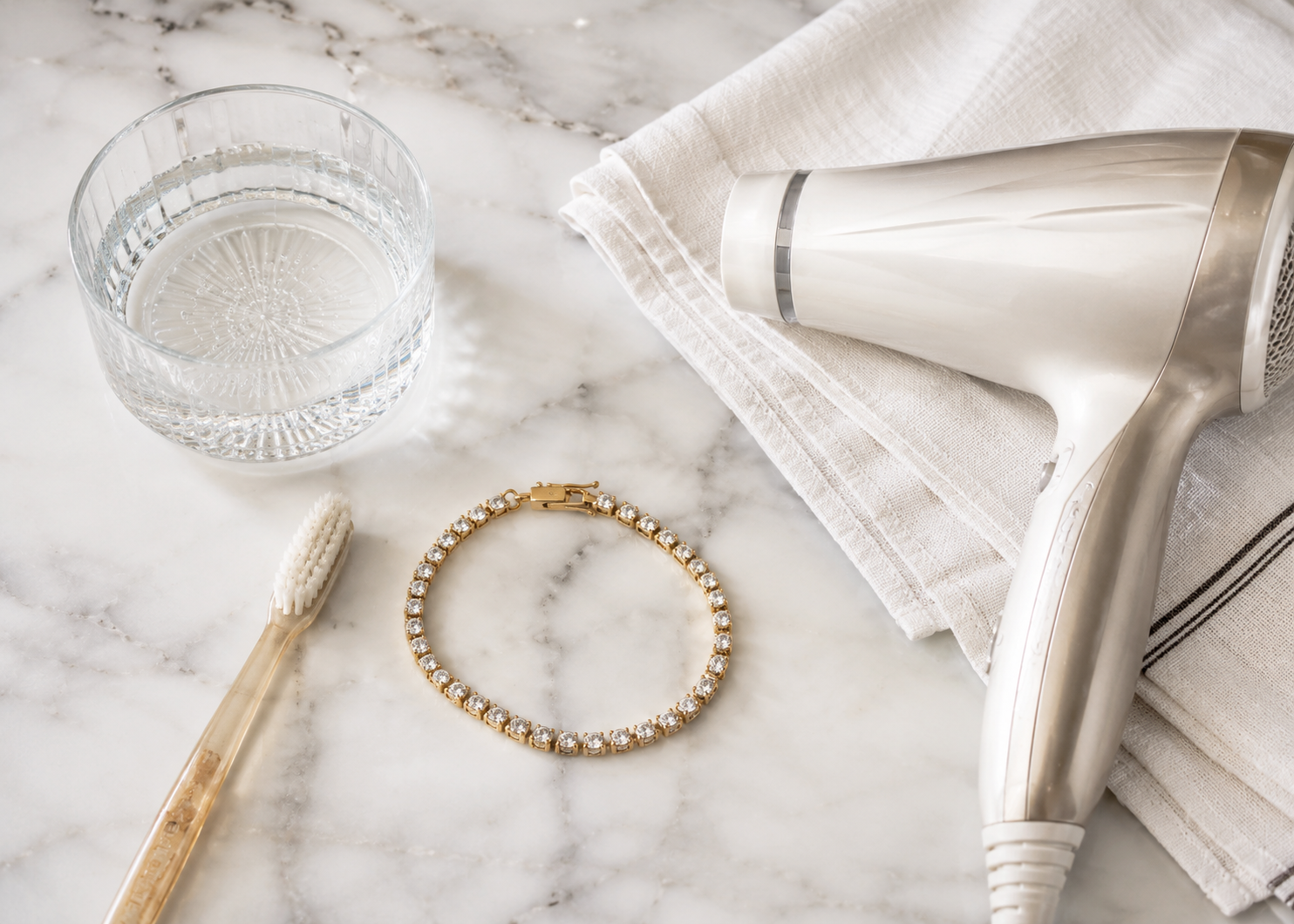
Brush gently with a soft brush — an old, worn toothbrush is ideal, as the bristles have become extra soft over time. Focus especially on the underside of each stone and around the prongs, where dirt typically collects.

4. Rinse thoroughly
Rinse thoroughly with clean demineralised water so that all the soap is removed.

5. Dry it correctly
Lay the bracelet on a tea towel and use a hairdryer on a low heat setting to remove the water. Avoid wiping the piece with a cloth — fibres from the cloth can catch in the settings and, at worst, push a diamond loose.

What to avoid
Some of the products most readily available in the bathroom cabinet are actually among the worst for your jewellery. Toothpaste is too abrasive and can scratch both gold and diamonds, even though it is often recommended as a quick home remedy. Chlorine, bleach, acetone and alcohol can attack the surface of the gold and should never come into contact with the piece. Also avoid using an ultrasonic cleaner at home — professional ultrasonic cleaners can safely be used on diamonds, but without a professional to assess the settings first, you risk the vibrations loosening a stone that was already loose.
Also take the bracelet off before applying cream, perfume or hairspray — the chemicals in these products leave a film on the stones and can attack the metal over time. A good rule of thumb is to put your jewellery on last when getting ready, and take it off first when you come home, sleep, shower, swim or exercise.
How to store it when you are not wearing it
Store your tennis bracelet on its own in a soft jewellery box or pouch, separate from other jewellery, so it is not scratched by harder materials such as rings or pendants. As a tennis bracelet consists of many links joined by small hinges, it is best stored lying flat rather than hanging or folded — this protects both the links and the clasp. Also avoid storing it in the bathroom or other places with high humidity and temperature fluctuations, as this can affect the metal over time.
How often should it be checked by a professional?
Although home cleaning keeps the bracelet looking good day to day, you should have it inspected by a professional once or twice a year. During a professional check, every single stone is checked to ensure it sits securely in its setting, the prongs are tightened if necessary, and the clasp is tested. It is this check that really prevents you from losing a diamond because a setting has imperceptibly loosened over time.
If you are unsure whether your bracelet needs a service check, you are always welcome to visit our showroom in Vodskov and have it assessed.
Signs you should have it checked straight away
Some signals should not wait for the annual check. If you hear a slight clicking or rattling sound when you move the bracelet, it may be a sign of a loose stone or link. If a diamond suddenly looks dull or cloudy, even after cleaning, it may be due to a crack or damage to the setting rather than ordinary dirt. And if the clasp feels loose or insecure, have it checked before wearing the bracelet again — after all, that is what holds the whole bracelet in place.
Good care is part of the investment
A tennis bracelet is not just a piece of jewellery you put on — it is an investment that can last for generations if it is properly cared for. At Manich we offer our tennis bracelets in 18 karat gold, which is already more skin-friendly and has a deeper colour than the 14 karat gold most other retailers use — but whatever the karat, it is ongoing care that determines whether the piece looks just as beautiful in ten years as it does today.
See our tennis bracelets in 18 karat gold → or read more about the difference between 14K and 18K gold.