Pink diamonds: why colour intensity determines the price
Pink diamonds are among the rarest and most sought-after gemstones in the world. Two pink diamonds of the same carat weight can still have very different prices, and the decisive difference often lies in the intensity of the colour.
With coloured diamonds, it is not only size and clarity that determine value. The strength, purity and saturation of the colour are often far more important. If you want to know what a pink diamond costs, read our guide to pink diamond prices.
What makes pink diamonds so rare?
The yellow tone in many white diamonds is caused by the trace element nitrogen. Pink diamonds, on the other hand, get their colour when the crystal structure is deformed under extreme pressure deep beneath the earth's surface.
Only a very small proportion of the world's diamond production is natural pink diamonds, and since the closure of the Argyle mine in Australia they have become even rarer.
GIA's colour scale for pink diamonds
GIA grades coloured diamonds on three factors:
- Hue: the basic colour itself
- Tone: how light or dark the stone is
- Saturation: how saturated the colour appears
For white diamonds, GIA uses a different scale. Read about GIA's D–Z colour scale and what G–J colour means for the price (in Danish).
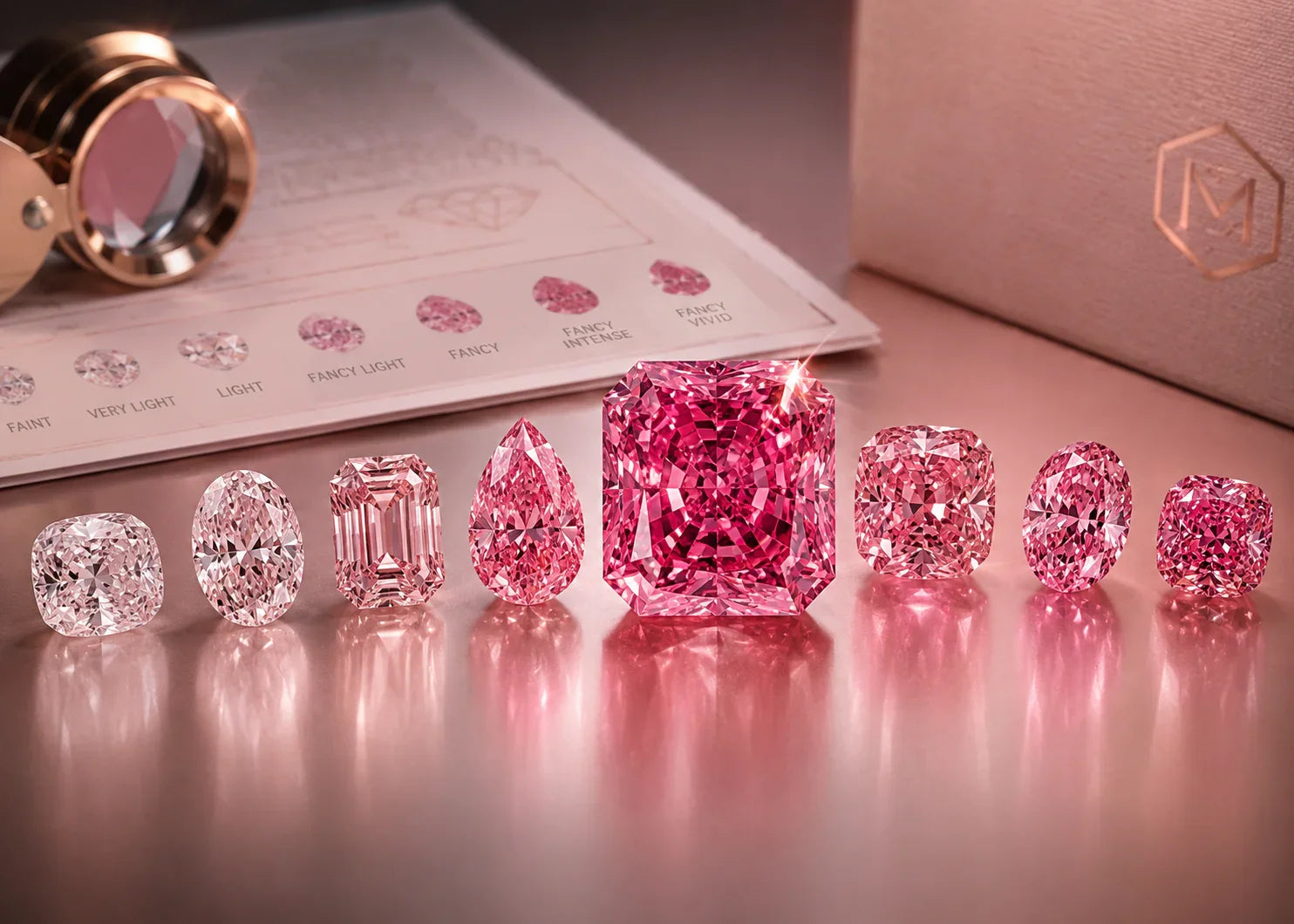
Fancy Light Pink
A soft, elegant pink shade with lower colour saturation. These diamonds are exclusive, but more accessible than the stronger colour grades.

Fancy Pink
Here the pink colour becomes clear and lively. Fancy Pink diamonds are considerably rarer and more sought after by collectors.

Fancy Intense Pink
The colour is now much deeper and more intense. Even smaller diamonds can look very vivid in this colour grade. See for example our 0.53 ct Fancy Intense Pink lab-grown diamond with an IGI report.

Fancy Vivid Pink
The rarest and most valuable category. Fancy Vivid Pink diamonds have a very strong, pure pink colour. As lab-grown, you can get the colour for a fraction of the price – for example our 0.10 ct Fancy Vivid Pink, 2.15 ct heart-shaped Fancy Vivid Pink or 3.70 ct pear-shaped Fancy Vivid Pink.

Why small colour differences can change the price considerably
With white diamonds, the difference between, say, G and H colour is often almost invisible. With pink diamonds, a small change in colour saturation can mean large price differences.
The purer, more vivid and more evenly distributed the pink colour, the higher the value typically is.
Secondary hues also matter a great deal
Not all pink diamonds are pure pink. Many have an undertone:
- Purplish Pink (purple undertone)
- Orangy Pink (orange undertone)
- Brownish Pink (brown undertone)
Purple undertones are often considered attractive, while brown undertones usually reduce the diamond's value.

Natural and lab-grown pink diamonds
Natural pink diamonds are among the rarest gemstones in the world and trade at very high prices.
Lab-grown pink diamonds make stronger colours, larger stones and high clarity possible at a much lower price. The colour is usually treated, and this is stated on the report. See our coloured lab-grown diamonds and natural coloured diamonds.
How to choose the right pink diamond
When choosing a pink diamond, you should look in particular at:
- Colour intensity
- How the colour looks in natural light
- Any secondary undertones
- How evenly the colour is distributed
- Certification from e.g. GIA or IGI, and the difference between them (in Danish)
In coloured diamonds, colour is often more important than both clarity and carat weight.
Pink diamonds at Manich Jewelry
We help customers with both natural and lab-grown pink diamonds in a range of colour grades and budgets, and we advise on colour intensity, undertones, certification and bespoke jewellery with coloured diamonds.
We always recommend that you verify the report online before buying. It takes 30 seconds and is free.
Frequently asked questions about pink diamonds
What does colour intensity mean in pink diamonds?
Colour intensity describes how strong and saturated the pink colour appears in the diamond. The more vivid and intense the colour, the rarer and more valuable the diamond typically is.
Which pink diamond colour is most valuable?
Fancy Vivid Pink is usually considered the most exclusive and valuable colour grade, because the colour is very intense and very rare.
What is the difference between Fancy Pink and Fancy Intense Pink?
Fancy Intense Pink has a much stronger and deeper colour saturation than Fancy Pink. Even small differences in colour intensity can produce large price differences.
Are natural pink diamonds rare?
Yes. Natural pink diamonds are among the rarest gemstones in the world. Historically, most came from the Argyle mine in Australia.
Why are pink diamonds more expensive than white diamonds?
Pink diamonds are far rarer than white diamonds, especially in high colour intensity. The combination of rarity and demand drives prices up.
Do secondary hues affect the price?
Yes. Pink diamonds can have undertones such as purple, orange or brown. Purple undertones are often considered attractive, while brown undertones typically reduce the value.
Are lab-grown pink diamonds cheaper?
Yes. Lab-grown pink diamonds cost considerably less than natural ones and offer intense colours at a lower price. See what a pink diamond costs.
How are pink diamonds certified?
Pink diamonds are typically certified by laboratories such as GIA and IGI, which assess colour intensity, secondary hues, clarity and carat, and whether the colour is natural or treated.
What affects the price of a pink diamond most?
Colour intensity is usually the most important factor, followed by colour purity, secondary tones, size and clarity.